
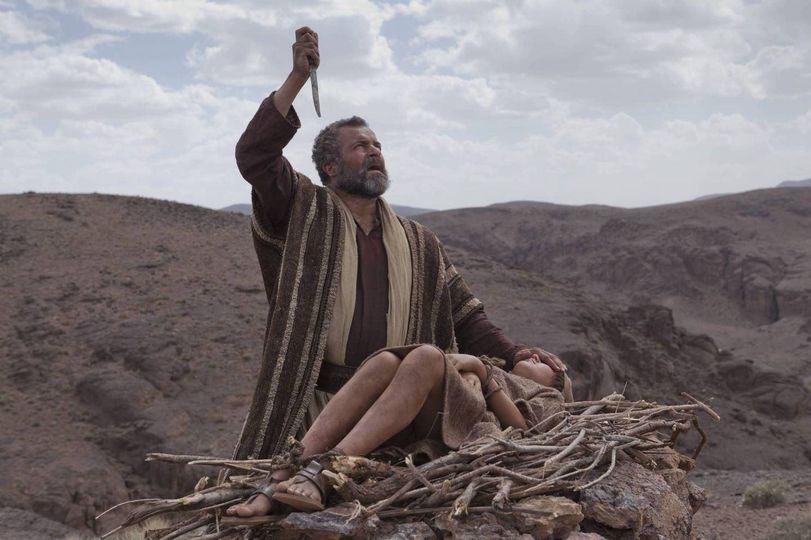
Faith in Action: Abraham’s Test
Galatians 3:6 states, “Even as Abraham believed God, and it was accounted to him for righteousness.” Many Christians interpret this verse to mean that faith alone—without works—is sufficient for salvation. But is that truly what the scriptures teach? Let’s consider Abraham’s story.
Would Abraham’s belief have been “accounted to him for righteousness” if he had refused to obey God’s command to sacrifice Isaac, his beloved son? After all, if belief alone is enough, why would Abraham have needed to act?
The epistle to the Hebrews provides a key insight:
“By faith Abraham, when he was tried, offered up Isaac: and he that had received the promises offered up his only begotten son, of whom it was said, ‘That in Isaac shall thy seed be called:’ accounting that God was able to raise him up, even from the dead; from whence also he received him in a figure” (Hebrews 11:17–19).
Abraham’s faith wasn’t passive. His belief in God’s promises moved him to act, even when the command was incomprehensible. He trusted that God would fulfill His covenant, even if it meant raising Isaac from the dead. Abraham’s faith was alive, dynamic, and transformative—it was his obedience that completed his faith and made it “accounted to him for righteousness.”
This principle is central to the doctrine of The Church of Jesus Christ of Latter-day Saints. Faith without works is dead (James 2:17–20). Belief alone is insufficient to redeem or save, as even devils believe and tremble (James 2:19). True faith compels action and obedience, enabling us to receive God’s promises.
Abraham’s supreme act of faith not only demonstrated his trust in God but also opened the way for the greatest blessings. Through his faith and works, he received the Abrahamic Covenant, promising him countless descendants and the role of blessing all nations through his seed. This profound truth underscores the LDS teaching that salvation is a process requiring both faith and works—a partnership with God to receive His promised blessings.
Faith that is alive transforms us, compels us to act, and aligns us with God’s eternal purposes. As we follow Abraham’s example, we too can participate in the divine work of salvation and become heirs to the promises of God.
What then is real faith? See Here
James’s Choice of Abraham
James’s choice of Abraham is not accidental—it is surgical.
Abraham lived centuries before the Law of Moses. There was no Sinai covenant, no Levitical system, no ceremonial code to keep. And yet James tells us Abraham was “justified by works, when he had offered Isaac his son upon the altar” (James 2:21–24). That alone dismantles the idea that salvation ever depended on Mosaic law-keeping. Abraham could not have been saved by a law that did not yet exist.
But James is also dismantling something else.
Abraham was not justified because he merely believed God in the abstract. If Abraham had said, “I believe God,” and then taken a nap instead of taking his son—his only son whom he loved—to the mountain, there would have been no righteousness to speak of. Scripture does not praise Abraham for internal agreement. It praises him for covenant loyalty expressed through obedience.
“Seest thou how faith wrought with his works, and by works was faith made perfect?”
Faith that never moves is not faith at all. Abraham’s belief mattered precisely because it acted. His faith was completed—brought to maturity—by obedience. Not replaced by works. Not earned by works. Revealed by works.
Paul and the Same Truth
Paul teaches the same thing when he writes, “Abraham believed God, and it was counted unto him for righteousness” (Genesis 15:6; Romans 4:3). But Paul is not describing belief as mental assent. Abraham believed God enough to obey Him. That belief took Isaac up the mountain. It raised the knife. It trusted that God could keep His promise even if obedience seemed to threaten it (Hebrews 11:17–19).
This is why the Law of Moses cannot be the mechanism of salvation.
The law came later, and it came for a purpose—but not to replace faith. Paul calls it a “schoolmaster to bring us unto Christ” (Galatians 3:24). A schoolmaster disciplines, restrains, teaches, and points forward. It does not give life.
The Book of Mormon states this plainly and without apology:
“Notwithstanding we believe in Christ, we keep the law of Moses, and look forward with steadfastness unto Christ, until the law shall be fulfilled.”
Faith precedes the law. Christ is the object. The law is kept because of commandments, not because it saves (2 Nephi 25:25). Nephi goes even further, calling the law “dead” apart from Christ and explaining that its very purpose was to teach people why they needed Him (2 Nephi 25:27).
In other words, Israel was never saved by law-keeping any more than Abraham was saved by napping.
Grace, Continuity, and the Unchanging God
Grace saved Abraham. Grace saved Israel. Grace saves us.
But grace has never meant passivity.
This is why Malachi’s declaration matters: “I am the Lord, I change not” (Malachi 3:6). God does not shift from grace to law and back again. What changes is the administration, not the substance. Shadow gives way to fulfillment; promise gives way to presence.
Christ Himself confirms this continuity when He declares that the law of Moses was fulfilled in Him—not exposed as a mistake, but completed exactly as intended (3 Nephi 15:4–10; Matthew 5:17).
The Unchanging Pattern
So when James insists that “faith without works is dead” (James 2:26), he is not contradicting Paul. He is contradicting the notion that belief alone—belief that costs nothing, risks nothing, obeys nothing—has ever been sufficient. Even the devils believe (James 2:19). They are not saved.
From Abraham onward, the pattern has never changed:
Grace originates with God.
Faith receives it.
Obedience expresses it.
Christ fulfills it.
Or, as Nephi concludes with near-painful clarity:
“The right way is to believe in Christ, and deny him not.”
Abraham believed God.
And because he believed Him—he climbed the mountain.